

Most bidders know that “local content” affects the award of Saudi government contracts. Few know by how much, or exactly how a bid’s score is computed. The formula is not a secret: it is set out in the Regulations for Preference of Local Content, Local SMEs and Listed Companies in Works and Procurement, issued by Council of Ministers Resolution No. 245 dated 29/3/1441H under Article 9 of the Government Tenders and Procurement Law. This guide explains the mechanism clause by clause, then applies it to a worked example that shows when the higher-priced bid wins and what each point on a local content certificate is worth.
1. Where does the mechanism apply?
Article 14 requires the government entity to apply the “local content weighting in financial evaluation” mechanism to high-value contracts other than supply contracts; the Authority sets the high-value threshold in agreement with the Expenditure Efficiency Center (Article 3). Article 18 extends the mechanism to supply contracts designated by the Authority and to other works and procurement below the high-value threshold that the Authority designates, using the “adjusted value” of bids in both cases: after applying the national-product-share formula for supply contracts, or after granting local SMEs a 10% price preference.
2. Three numbers the bidder submits
- Baseline: the local content percentage of the bidder’s establishment at the time of bidding, evidenced by the Local Content Certificate issued by the Authority after verification by a qualified audit firm. Where the Authority sets a minimum baseline for a particular tender and the bidder falls short, the bidder is excluded at the technical evaluation stage, before the financial bid is opened (Article 15).
- Target local content percentage: the percentage the bidder commits, in its technical bid, to achieve by the end of the contract, at contract or entity level as the tender documents specify (Articles 14 and 16). The entity or the Authority may request clarifications during bid examination, and a bid may be excluded if adequate clarifications are not provided.
- Listing on the Saudi Exchange: a listed company receives an additional 5 points within the local content component of the formula.
3. The formula as set out in Article 17
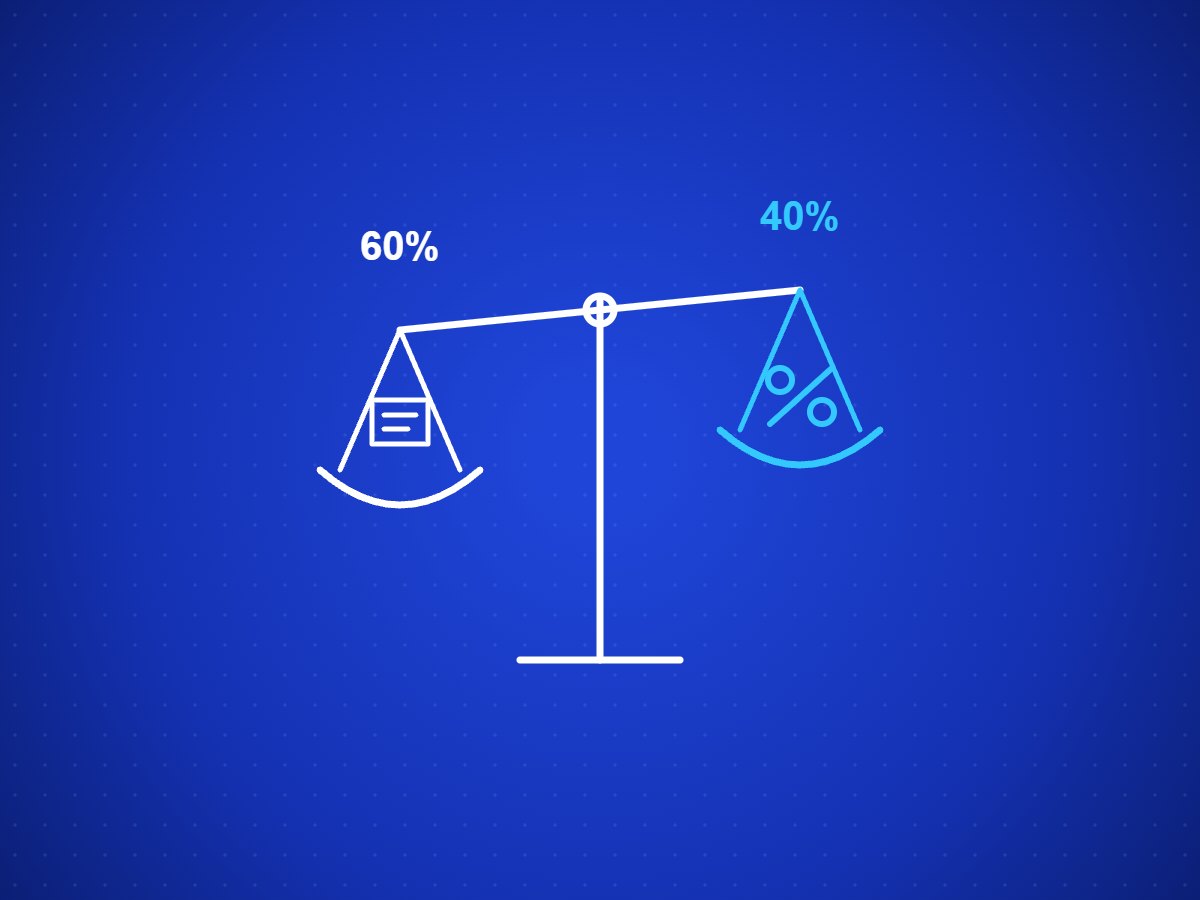
A bid that passes the technical evaluation is scored with a 60% weight for price and 40% for local content, as follows:
Financial evaluation score = (lowest price among technically qualified bids ÷ price of the bid being evaluated) × 60% + (target local content % × 50% + baseline × 50% + 5% for a listed company) × 40%
The weights of the baseline, the target and the listing may be increased by agreement between the Authority and the Center. The contract is awarded to the bidder with the highest score, provided the difference between its price and the lowest technically qualified price does not exceed 10%; if it does, the entity moves to the next-ranked bidder, and the percentage may be raised by agreement between the Authority and the Center if stated in the tender documents (Article 19).
4. A worked example
A high-value contract with two technically qualified bids, both from unlisted companies:
| Bidder A | Bidder B | |
|---|---|---|
| Bid price | SAR 10,000,000 | SAR 10,800,000 |
| Baseline (from the certificate) | 30% | 55% |
| Target percentage | 40% | 65% |
| Price component | (10,000,000 ÷ 10,000,000) × 60% = 60.00 | (10,000,000 ÷ 10,800,000) × 60% = 55.56 |
| Local content component | (40% × 50% + 30% × 50%) × 40% = 14.00 | (65% × 50% + 55% × 50%) × 40% = 24.00 |
| Score | 74.00 | 79.56 |
Bidder B wins despite a price 8% higher, because the difference is within the 10% ceiling. Had B priced at SAR 11,200,000 (12% higher), its score would still be higher (77.57 against 74.00), but the award would pass to A because the price gap exceeds the ceiling.
What is each point worth?
- Each percentage point of baseline is worth 0.2 points of the final score (1% × 50% × 40%), and so is each point of target.
- A listing on the Saudi Exchange is worth 2 points (5% × 40%).
- Each 1% of price above the lowest bid costs roughly 0.6 points for small differences. Raising the baseline by ten percentage points (2 points of score) therefore offsets a price premium of about 3.3% over the cheapest competitor.
- The practical result: a company that lifts its percentage from 35% to 55% before bidding gains 4 full points, a margin that decides many tenders.
5. What does the certified public accountant do here?
The baseline is not a figure the establishment writes about itself; it is the output of independent verification. The Authority’s organisational rules, issued by Council of Ministers Resolution No. 551 dated 15/9/1442H, empower it to set local content measurement criteria and the calculation mechanism, to set the rules for calculating and approving percentages in private-sector establishments, to issue certificates, and to qualify licensed audit firms to audit local content percentages. The number that enters the formula therefore passes through an Authority-qualified firm performing agreed-upon procedures on workforce, procurement, asset and services data, as detailed in our guide on the Local Content Certificate. We provide this within our local content service, and we usually start well ahead of the tender date because the certificate is built on approved financial statements for a full year.
6. Mistakes that cost points
- Bidding without a certificate: a zero baseline forfeits up to 20 of the 40 points allocated to local content, and may mean technical exclusion where a minimum is set.
- An inflated target: it earns points today and a penalty of up to 10% of the contract value tomorrow if the gap between target and achieved exceeds 5 points (Article 31), as explained in our guide on local content obligations after award.
- Confusing contract level with entity level: the tender documents specify which is required, and the calculation differs.
- Ignoring the adjusted value: where the mechanism is applied to supply contracts or to SMEs, the adjusted price enters the formula, not the price written in the bid.
What weight does local content carry in the financial evaluation of Saudi government tenders?
Under Article 17 of the Local Content Preference Regulations: 60% for price and 40% for local content, with the local content component split equally between the baseline and the target (50% each) plus 5% for a company listed on the Saudi Exchange.
What is the difference between the baseline and the target percentage?
The baseline is the bidder’s entity-level local content percentage at the time of bidding, evidenced by the Local Content Certificate. The target is what the bidder commits to achieve by the end of the contract and is enforced through reports and penalties.
Can the higher-priced bid win because of local content?
Yes, if it obtains the highest overall score and the difference between its price and the lowest technically qualified price does not exceed 10% (Article 19). Beyond that gap the award passes to the next-ranked bidder.
What happens if my company does not meet the minimum baseline?
Where the Authority sets a minimum baseline for the tender and the bidder does not meet it, the bidder is excluded at the technical evaluation stage under Article 15, before its financial bid is considered.
To which contracts does the weighting mechanism apply?
High-value contracts other than supply contracts (Article 14), and the supply contracts and other works the Authority designates, using the adjusted value of bids (Article 18).
How many points does each percentage point on the certificate earn?
0.2 points of the final score for each percentage point of baseline, and the same for each point of target, since each is multiplied by 50% and then by 40%.
Sources
- Regulations for Preference of Local Content, Local SMEs and Listed Companies in Works and Procurement, Council of Ministers Resolution No. 245 dated 29/3/1441H, Articles 1, 3, 4 and 14–19 (Bureau of Experts, Council of Ministers)
- Government Tenders and Procurement Law, Royal Decree M/128 dated 13/11/1440H, Article 9 (Bureau of Experts, Council of Ministers)
- Organisational Rules of the Local Content and Government Procurement Authority, Council of Ministers Resolution No. 551 dated 15/9/1442H, Article 4 (Bureau of Experts, Council of Ministers)



)