

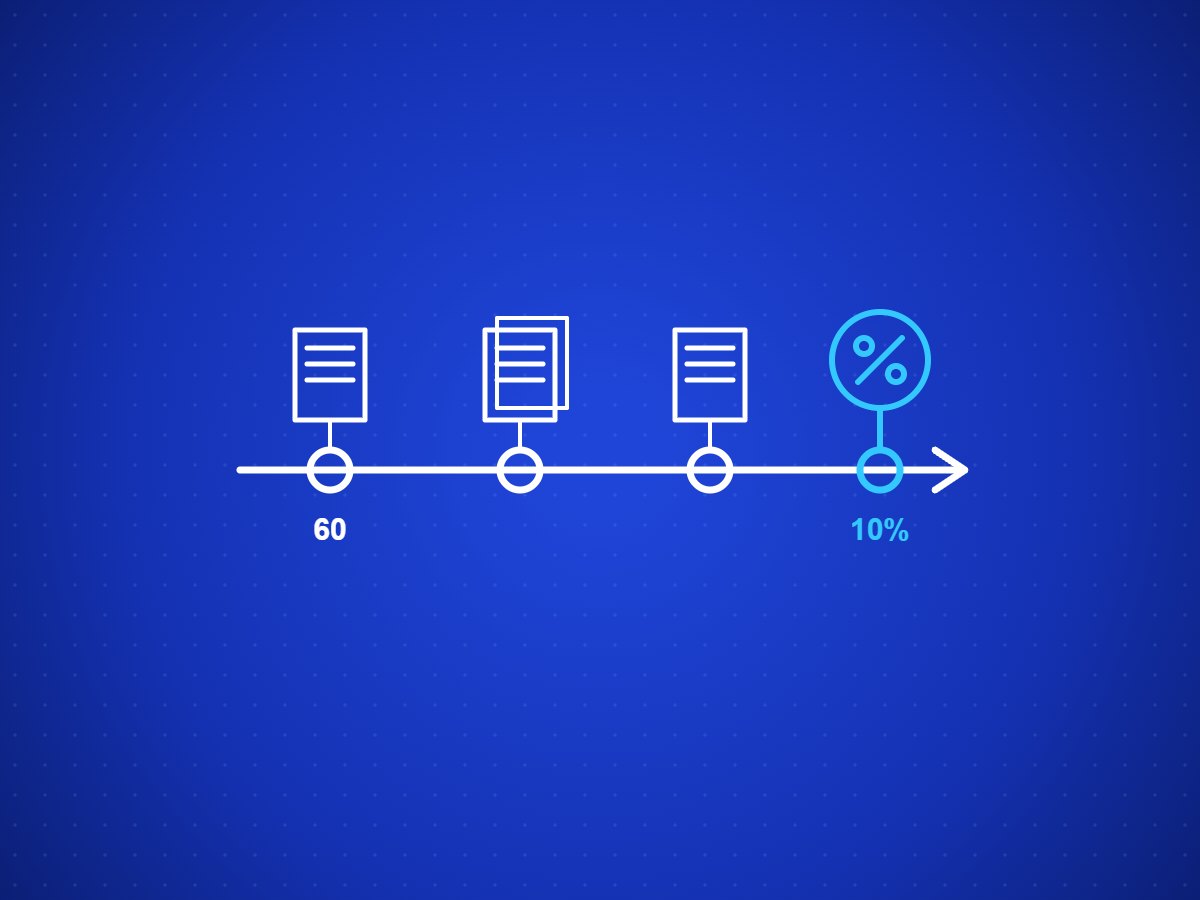
The award is not the end of the local content file; it is its real beginning. The target percentage that earned the establishment points in the evaluation becomes, once the contract is signed, a contractual obligation with a plan, periodic reports and a final report, backed by penalties of up to 10% of the contract value and, in serious cases, a ban on dealing with government entities. These obligations are set out in Articles 20 to 37 of the Regulations for Preference of Local Content, Local SMEs and Listed Companies in Works and Procurement (Council of Ministers Resolution No. 245 dated 29/3/1441H). This guide arranges them on a timeline and shows how to manage the percentage during execution so that the final report holds no surprises.
1. The two mechanisms that create the obligation
A contractor falls under these obligations in two cases: where the contract was awarded under the local content weighting in financial evaluation mechanism explained in our guide on the local content weighting formula, or under the minimum required local content mechanism (Articles 23–27), which applies to the high-value contracts the Authority designates in agreement with the Center, and to the supply contracts and other works it designates. Under the minimum mechanism, the contract-level target submitted by the bidder may not be below the minimum stated in the tender documents, otherwise the bidder is excluded at the technical evaluation stage (Article 25). The same rules on baseline, progressive plan, reports and final report apply to this mechanism (Article 26).
2. The obligations timeline
| Stage | Obligation | Deadline and basis |
|---|---|---|
| After award | Submit the progressive local content plan through the Local Content electronic portal, at contract or entity level, consistent with the target percentage | Within 60 days of award (Article 20); compliance is reflected in the contractor’s performance evaluation |
| During execution | Regular periodic reports on the portal form showing progress towards the target, with the government entity monitoring adherence to the progressive plan | As set in the tender documents (Article 21); the documents may require the Authority’s approval of reports before submission |
| End of contract | A final report stating the achieved percentage, to confirm it matches the target | The Authority’s approval is required before submission to the entity; the Authority responds within 15 working days, failing which approval is deemed given; the Authority may require an audit of the final report on terms included in the tender documents (Article 22) |
| Supply contracts | A final report evidencing that the products are national, per the Authority’s instructions | Within 30 days of contract end; the entity reviews it within 10 working days, failing which it is deemed approved (Article 13) |
3. Penalties and their ceiling
| Breach | Penalty | Basis |
|---|---|---|
| Gap between the target and the achieved percentage at contract end exceeding 5 percentage points (weighting and minimum mechanisms) | Up to 10% of the contract value | Article 31 |
| Failure to deliver the final report within the period set in the tender documents | Up to 10% of the contract value | Article 32 |
| Failure to meet the national product share in supply contracts | Up to 10% of the supply contract value | Article 29 |
| Failure to give preference to national products when buying contract materials | Up to 10% of the value of the item concerned | Article 30 |
| Ceiling on all penalties under the Law, its Implementing Regulations and these Regulations | 20% of the contract value; the Minister may raise it if disclosed before bids are submitted | Articles 33 and 34 |
Beyond the penalty, the government entity refers the contractor to the committee established under Article 88 of the Government Tenders and Procurement Law to consider barring it from dealing with government entities, downgrading its classification, or both, where the gap between target and achieved exceeds 15 percentage points, the gap in the national product share exceeds 50% in supply contracts, or the final report is not delivered (Article 37). Adherence to the plan and reports is also reflected in the contractor’s performance evaluation (Article 6).
4. The five-point margin and how to manage it
The Article 31 penalty is not triggered by any shortfall, only when the gap exceeds 5 percentage points. That margin is where real management happens: an establishment that committed to 60% and achieved 56% is not penalised; one that achieved 54% is. We therefore recommend three rules when setting the target before bidding: build it on the actual baseline plus changes in the contract itself that can be evidenced (local suppliers with certificates, Saudi workforce, assets inside the Kingdom); keep a safety margin of at least 3 points below what management expects; and measure the percentage monthly rather than at contract end.
A measurement system inside the contract
- A separate cost centre for each contract: because the percentage is usually required at contract level, the contract team’s payroll, purchases, asset depreciation and service contracts must be separated from the rest of the establishment.
- A supplier register with certificate status: for every supplier and subcontractor: does it hold a Local Content Certificate, at what percentage, and when does it expire? Purchases from a certified supplier count at its percentage, and the absence of a certificate weakens the ratio.
- Monthly reconciliation: the contract-to-date percentage against the progressive plan, with variance analysed by axis (workforce, procurement, assets, services).
- Early corrective decisions: redirecting upcoming purchases to local suppliers, restructuring subcontracts, or adjusting the workforce mix before the gap becomes irrecoverable.
- An audit-ready evidence file: invoices, contracts, payroll records and supplier certificates organised by axis, because the Authority may require an audit of the final report.
5. The certified public accountant’s role
Our work intersects with this file at three points: issuing the Local Content Certificate that fixes the baseline, designing the in-contract measurement system so that the figures can be evidenced, and auditing the final report when the Authority requires it or the tender documents stipulate it. Because the Authority qualifies licensed audit firms to audit local content percentages under Article 4 of its organisational rules, a report issued by a qualified firm shortens the rounds of queries. We provide this within our local content service.
6. Questions contractors ask
When must the progressive local content plan be submitted?
Within 60 days of the contract award, through the dedicated form on the Local Content electronic portal, consistent with the target percentage (Article 20 of the Preference Regulations).
What is the penalty if the establishment fails to achieve the target?
A penalty of up to 10% of the contract value if the gap between the target and the achieved percentage at contract end exceeds 5 percentage points (Article 31), within an overall penalty ceiling of 20% of the contract value under the Law and its regulations (Article 34).
Does the final report need the Authority’s approval?
Yes. The Authority’s approval is required before the final report is submitted to the government entity; the Authority responds within 15 working days, failing which approval is deemed given, and it may require an audit of the report (Article 22).
When is a contractor referred to the violations committee for a ban?
Where the gap between the target and the achieved percentage exceeds 15 percentage points, the gap in the national product share exceeds 50% in supply contracts, or the final report is not delivered on time (Article 37).
What is the difference between the minimum mechanism and the weighting mechanism?
Under the weighting mechanism the target and baseline enter the financial evaluation formula with a 40% weight; under the minimum mechanism any bid whose target falls below the minimum in the tender documents is excluded technically (Article 25). The same plan, reporting and penalty obligations apply to both.
Can the percentage be set at entity level instead of contract level?
Yes. The tender documents specify whether the target and the progressive plan are at contract or entity level (Articles 14 and 20); under the minimum mechanism the target is submitted at contract level (Article 25).
Sources
- Regulations for Preference of Local Content, Local SMEs and Listed Companies in Works and Procurement, Council of Ministers Resolution No. 245 dated 29/3/1441H, Articles 6, 13 and 20–37 (Bureau of Experts, Council of Ministers)
- Government Tenders and Procurement Law, Royal Decree M/128 dated 13/11/1440H, Articles 9 and 88 (Bureau of Experts, Council of Ministers)
- Organisational Rules of the Local Content and Government Procurement Authority, Council of Ministers Resolution No. 551 dated 15/9/1442H, Article 4 (Bureau of Experts, Council of Ministers)