
E-invoicing in Saudi Arabia began in December 2021 with a simple first phase: issue your invoices from an electronic system instead of a receipt book or a word-processor file. The second phase — “integration” — then rolled out in waves by descending revenue, until wave 25 reached every business whose VAT-taxable revenues exceeded SAR 187,500 in any year from 2022 to 2025. In other words, the question is no longer “does phase 2 apply to me?” but “when, and are my books ready for it?”
This guide explains both phases from ZATCA’s own sources, then focuses on what matters to a business owner and their accountant: what changes in the books, invoices and reconciliations after integration, and how to avoid the most expensive mistakes.
Who is subject to e-invoicing?
Resident taxable persons registered for VAT in the Kingdom, and any third party issuing tax invoices on their behalf. Non-residents are outside its scope. The obligation starts with VAT registration regardless of the size of the business; size only determines the timing of integration in phase 2.
Phase 1: generation and storage (since 4 December 2021)
- Tax invoices, simplified tax invoices and credit and debit notes are issued through a compliant e-invoicing system — handwritten invoices and invoices produced in text-editing software are not accepted.
- Invoices and notes are stored electronically in an extractable form.
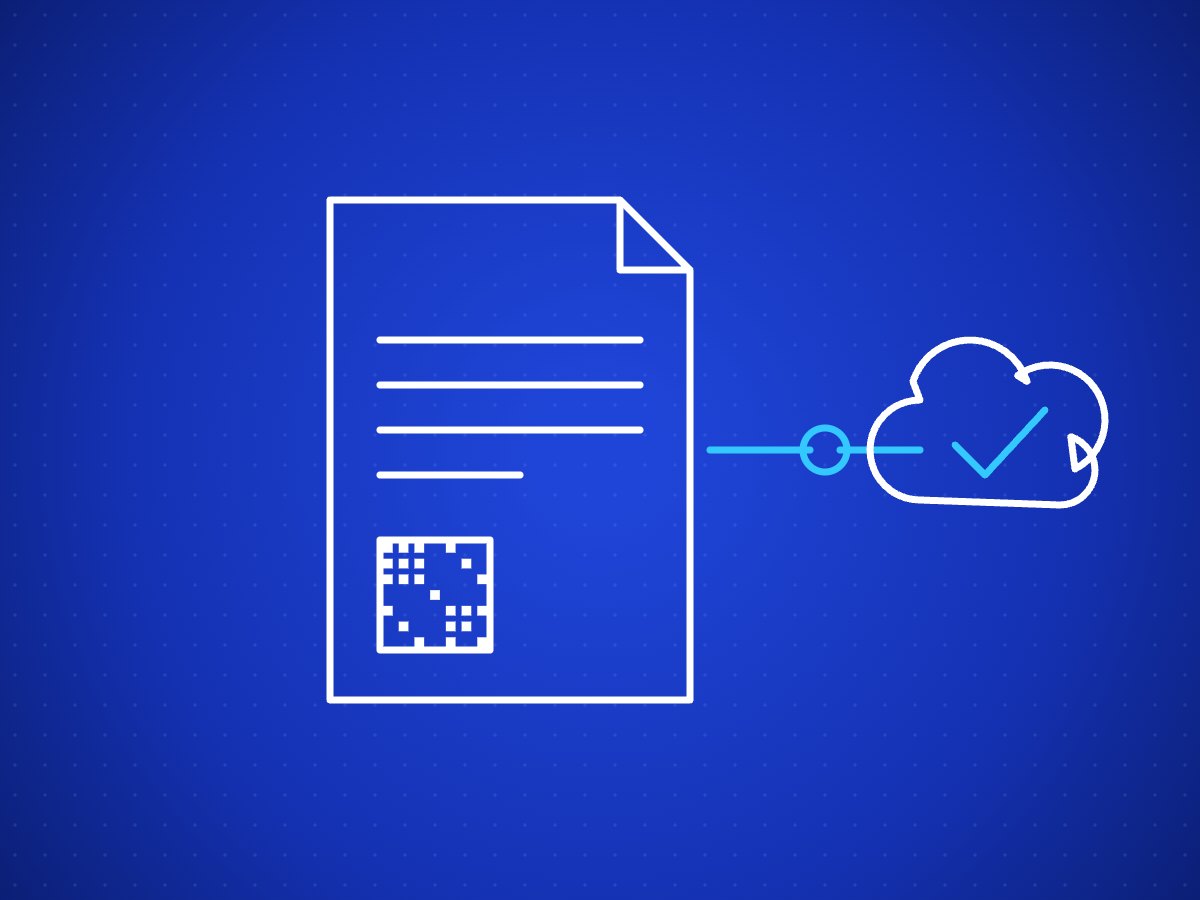
- A QR code is included on simplified tax invoices, carrying the seller’s name, VAT registration number, invoice date and time, VAT total and invoice total.
- Prohibited functions are blocked: deleting or editing an invoice after issue, changing the system time or date, exporting stamping keys. Corrections are made by a credit or debit note referencing the original invoice.
The rules distinguish two documents: the tax invoice (business-to-business or business-to-government), carrying full supplier and customer details, and the simplified tax invoice (for consumers, or for supplies below SAR 1,000 under Article 53 of the VAT Implementing Regulation). A tax invoice must be issued no later than the fifteenth day of the month following the month of supply.
Phase 2: integration (since 1 January 2023, in waves)
In this phase your invoicing system is integrated with ZATCA’s “Fatoora” platform, invoices are issued in a prescribed format (XML, or PDF/A-3 with embedded XML) and carry additional elements: a unique identifier (UUID), a cryptographic stamp, a hash of the previous invoice and a sequential counter. How the invoice is shared with ZATCA depends on its type:
| Invoice type | Mechanism | Timing |
|---|---|---|
| Tax invoice (B2B / B2G) | Clearance: sent to ZATCA and cleared before it is shared with the customer | In real time at issue |
| Simplified tax invoice (B2C) | Reporting: shared with ZATCA automatically after issue | Within 24 hours of issue |
ZATCA brings businesses into phase 2 in waves, announcing the criterion for each wave at least six months before its integration date and notifying every targeted taxpayer directly. The two most recent waves:
| Wave | Criterion | Integration date | Announced |
|---|---|---|---|
| 24 | VAT-taxable revenues above SAR 375,000 in 2022, 2023 or 2024 | By 30 June 2026 | 26 September 2025 |
| 25 | VAT-taxable revenues above SAR 187,500 in 2022, 2023, 2024 or 2025 | From 1 February 2027 | 24 July 2026 |
Note that the criterion is met if your revenues exceeded the threshold in any of the reference years, not only the latest one. A business whose revenues fell this year is still included if it crossed the threshold in an earlier year.
What changes in your books after integration?
Integration is not only a technical project; it changes how the accounts department works:
- The invoice becomes the source of the entry, not the other way round. Once cleared, an invoice cannot be edited, so any error in price, quantity or customer details is corrected by a credit or debit note linked to the original invoice — and all of it appears both in your books and in ZATCA’s data.
- No back-dated invoices. The sequence, counter and hash chain make it impossible to insert an invoice with an earlier date, ending the practice of “batching the month’s invoices at month end”.
- A three-way monthly reconciliation: what was reported to ZATCA through Fatoora, what is in the sales ledger, and what is in the VAT return must agree. Any difference is visible to ZATCA before you see it yourself.
- One invoice-numbering policy across the business even with several branches and points of sale, with an invoicing solution unit for every issuing device.
- Retention of e-invoices in their original electronic form throughout the period prescribed in the VAT Implementing Regulation (six years from the end of the tax period, longer for capital assets) — see our guide on mandatory books and retention periods.
- Linkage to the accounting system: the best arrangement is for the invoicing system to be the accounting system itself, or integrated with it automatically, so that sales and output-VAT entries arise from the cleared invoice without manual entry.
The most expensive mistakes we see
- Issuing a simplified invoice to a business customer who needs a full tax invoice to deduct input VAT — the customer loses the deduction and the disputes begin.
- Correcting errors by deleting the invoice from the system instead of issuing a credit note, which is a prohibited function.
- A supply date that differs from the invoice date without documentation, confusing the tax period in which the sale belongs.
- Points of sale in branches that are not integrated, so only part of the sales is reported to ZATCA.
- Revenue recorded in the books with no corresponding e-invoice (or the reverse) with no monthly reconciliation.
Penalties
The VAT Law imposes a fine of up to SAR 50,000, per tax period, on anyone who fails to keep invoices, books and records for the prescribed period (Article 45), and the fine may be doubled if the violation is repeated within three years (Article 47). An unregistered person who issues a tax invoice faces a fine of up to SAR 100,000 (Article 44). For e-invoicing violations ZATCA applies a graduated schedule that starts with a notice and escalates with repetition.
A practical readiness plan before your integration date
- Confirm your classification: did you exceed the threshold in any reference year, and have you received ZATCA’s notice?
- Choose a solution from ZATCA’s list of approved solution providers, or verify that your current system is compliant.
- Unify the numbering policy and the invoice and note types across branches and points of sale.
- Integrate invoicing with the accounting system, and decide who is authorised to issue credit notes.
- Integrate in the simulation environment first, then in production, well before the deadline.
- Build the three-way monthly reconciliation (Fatoora – sales ledger – VAT return) and make it part of the monthly close.
Within our accounting and bookkeeping service we build and run this reconciliation every month and review invoicing settings from the VAT angle, not only the technical one.
Frequently asked questions
My business is small and its revenues are below SAR 187,500 — am I exempt from e-invoicing?
No. Phase 1 (generation and storage) has applied to every VAT-registered person since 4 December 2021 regardless of size. The revenue threshold only determines when you are required to integrate under phase 2, and ZATCA notifies you when you are included in a wave.
What is the difference between “clearance” and “reporting”?
Clearance applies to tax invoices (between businesses): the invoice is sent to ZATCA and cleared before it is shared with the customer. Reporting applies to simplified tax invoices (to consumers): the invoice is issued to the customer and then shared with ZATCA automatically within 24 hours.
I made an error in a cleared invoice — do I delete it and issue a new one?
No. Deleting or editing after issue is a prohibited function. You issue a credit note (to reduce or cancel the amount) or a debit note (to increase it) referencing the original invoice, then a new invoice if needed.
Does e-invoicing replace bookkeeping?
No. The invoice is a document; the books (journal, ledger and inventory) are a separate obligation under the Commercial Books Law and the zakat and tax regulations. E-invoicing makes the sales side more accurate, but purchases, payroll, assets and adjustments still need regular books.
How often does ZATCA announce a new wave?
ZATCA announces each wave’s criterion at least six months before the integration date, and announcements followed one another through 2025 and 2026 until the threshold reached SAR 187,500. Follow ZATCA’s announcements or ask your accountant to track them.
Sources
- E-Invoicing — Zakat, Tax and Customs Authority
- Simplified Guideline for E-Invoicing Requirements — ZATCA
- Selection criterion for wave 24 of the integration phase — ZATCA, 26 September 2025
- ZATCA sets the criterion for wave 25 of the integration phase — Saudi Press Agency, 24 July 2026
- VAT Implementing Regulation — Articles 53, 58 and 66
- VAT Law — Articles 44, 45 and 47
For wave 25 specifically, read: E-Invoicing Phase 2 — Wave 25 and the 1 February 2027 deadline.